


How Many Landscape Lights Does a Typical Home Need?
Category: Landscape Lighting
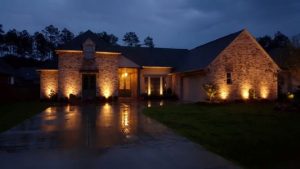
If you are planning professional landscape lighting in Madisonville, LA, one question comes up fast: how many lights will it take to make your home look great and feel safe at night? The right number is less about a magic total and more about your home’s size, architecture, trees, and how you use your outdoor spaces. This guide explains how pros at Aesthetic Landscapes size systems and why a thoughtful landscape lighting layout beats counting fixtures one by one.
What Drives the Number of Lights for a Madisonville Home
Every property is different, but four factors usually set the range for fixture counts in St. Tammany Parish: house width and height, tree canopy, pathway length, and how much evening activity happens outdoors. Homes tucked under live oaks near LA‑22 or along the Tchefuncte benefit from targeted accent lighting, while newer builds in Bedico often need more walkway visibility for guests and deliveries.
Local climate plays a role too. Humid evenings, summer storms, and occasional power outages change how bright and how often you want areas lit. Warm, even light that avoids glare is the goal.
Typical Fixture Counts By Area
Below are planning ranges our designers use to estimate project scale before finalizing beam spreads and exact placements. Your actual layout will be custom.
- Front entry and façade: 4–10 uplights for columns, peaks, and architectural features, plus 1–2 softer fixtures at the doorway.
- Primary walkway from driveway: 5–9 path lights, depending on run length and curves.
- Driveway edges: 4–8 low-glare markers or wide-flood accents where turn‑in visibility matters.
- Feature trees: 1–3 lights per tree based on trunk size, canopy spread, and desired drama.
- Back patio or deck: 4–8 fixtures combining downlight, niche light, and low-glare accents for steps and seating.
- Side yards and gates: 2–4 fixtures to remove dark gaps and guide movement.
For a typical Madisonville single‑story home on a quarter‑acre lot, that often lands between 16 and 30 fixtures. Larger two‑story homes with deep front yards or heavy tree cover can run higher.
Smart Spacing And Beam Spread In Low‑Voltage Designs
Low‑voltage systems give you precise control over brightness and coverage without harsh hot spots. In practice, most paths look balanced when fixtures are staggered rather than mirrored and when beam angles are matched to bed width. Tree accents get their own rules, since bark texture and canopy size affect aiming.
- Paths: consistent pools of light that overlap slightly keep footing clear without glare.
- Trees: narrow beams for tall, clean trunks; wider beams for spreading canopies and textured bark.
- Façade: mix of narrow and medium beams to reveal depth so brick, stone, and trim read naturally.
If you want an efficient, resilient setup that fits our coastal climate, explore low‑voltage lighting built for humid summers and sudden downpours.
Local insight: South Louisiana humidity and lake breezes can corrode bargain fixtures fast. Choosing sealed, marine‑grade or solid‑brass components helps your system keep its look and performance through storm season.
Examples For Common Northshore Home Styles
Ranch with wide front porch: Expect 6–10 façade uplights to lift columns and rooflines, plus 5–7 path lights to guide from the drive to the steps. A pair of downlights under porch eaves softens shadows where families gather.
Two‑story with gables: Plan 8–14 uplights to balance lower and upper elevations, 6–8 path lights along curved beds, and 2–4 accents for specimen trees. Taller walls need tighter beams to avoid spill into second‑floor windows.
Cottage under live oaks: Think 3–6 tree accents to “paint” canopy texture, 4–6 path lights near roots and curves, and 3–5 façade points to keep the entry warm without overpowering the oak’s silhouette.
How To Know When You Need More Or Fewer Lights
More fixtures make sense when your street is darker than usual, your driveway turns in sharply, or guests often arrive after sunset. Fewer fixtures can work when porch sconces already carry part of the load or when a single feature tree becomes the nighttime focal point.
Avoid the “runway” look on walkways. Gentle staggering and correct beam spread keep light on the ground where it belongs and off your guests’ eyes.
Color Temperature And Brightness That Feel Like Home
For brick and natural stone common around Madisonville, warm 2700K light keeps color true and feels welcoming. Too cool a tone can look harsh on clay soils and reflective surfaces. Lumen output should be balanced so the house reads clearly from the street without glare for neighbors or drivers.
Glare control is not optional. Shielded fixtures and careful aiming protect your view of the landscape and keep light out of windows and windshields.
Where Your Count Usually Lands
Most homes we see in Madisonville fall into three buckets once we account for house size, tree cover, and activity zones:
- Compact lots or townhomes: 10–18 fixtures
- Typical single‑family with one main path: 16–30 fixtures
- Large corner lots or homes with heavy canopy: 28–45+ fixtures
Those ranges are a starting line, not a rule. Our team sizes beam angles, shielding, and mounting height so the final result looks complete without wasted light.
Why Pros Start With A Nighttime Walkthrough
Designers look at how you live: where kids cut across the lawn, how guests approach, which views you see from the kitchen, and where steps collect shadows. We also note sprinkler overspray, drainage paths, and reflective surfaces so fixtures last and the effect stays clean.
Even the best fixture fails when placed in the wrong spot. The right plan protects plants, wiring, and finishes while highlighting what you love most.
What About Pathway Lighting Spacing?
Homeowners ask this a lot. The simple answer is that spacing depends on fixture type, beam width, and how quickly your soil and plantings absorb light. In our area, many beds are wide and curved, which calls for flexible spacing that follows the edge of the bed instead of a ruler‑straight line. That is why our crews lay out test pools of light before final placement, so your walk feels safe and natural.
Bringing It All Together For Madisonville, LA
If your goal is a warm welcome at the curb and confident footing around steps and paths, a measured plan will usually beat adding more fixtures. To see styles and ideas that fit our neighborhoods, browse our local outdoor lighting ideas and photo examples. When you are ready, our designers can map a layout that fits your home and schedule.
Want a deeper overview of design choices? The team at Aesthetic Landscapes walks you through fixture style, shielding, and aiming during your consultation. Many homeowners start by reviewing our approach to landscape lighting so they know what to expect on installation day.
Landscape Lighting In Madisonville, LA: How Many Lights Do You Need?
For a standard one‑story home with a single front path, the most common range is 16–24 fixtures. Homes with broad façades, a curved drive, or mature oaks trend higher. If you want a quick baseline tied to your square footage and stand of trees, our team can build a plan after one site visit and a brief evening check‑in to confirm balance and glare control.
You can also learn more about landscape lighting in Madisonville, LA and how it shapes curb appeal across the Northshore. Then, when it is time to make decisions, we will set spacing and brightness for comfort, safety, and a look you will enjoy every night.
Ready For A Custom Count And Design?
Let’s walk your property together, look at entrances, trees, and traffic paths, and size a layout that feels just right for weeknights and weekends. Start with our overview of landscape lighting, then schedule a visit with Aesthetic Landscapes at 985-201-9797. We will bring samples, map out options, and deliver a plan that fits your home and the way you live outdoors in Madisonville.